Temporary
Works
The engineering that keeps everything else standing while a structure comes down. Propping for retained walls, slabs and tilt panels, containment scaffold around live interfaces, and support where one building is separated from another. What stays up matters as much as what comes down.
Holding it up
while it comes down.
Any demolition that retains something needs temporary works. The moment one element is removed, the loads it was carrying go somewhere else, and the temporary works decide where. Get it right and nobody notices. Get it wrong and the retained structure is the next thing on the ground.
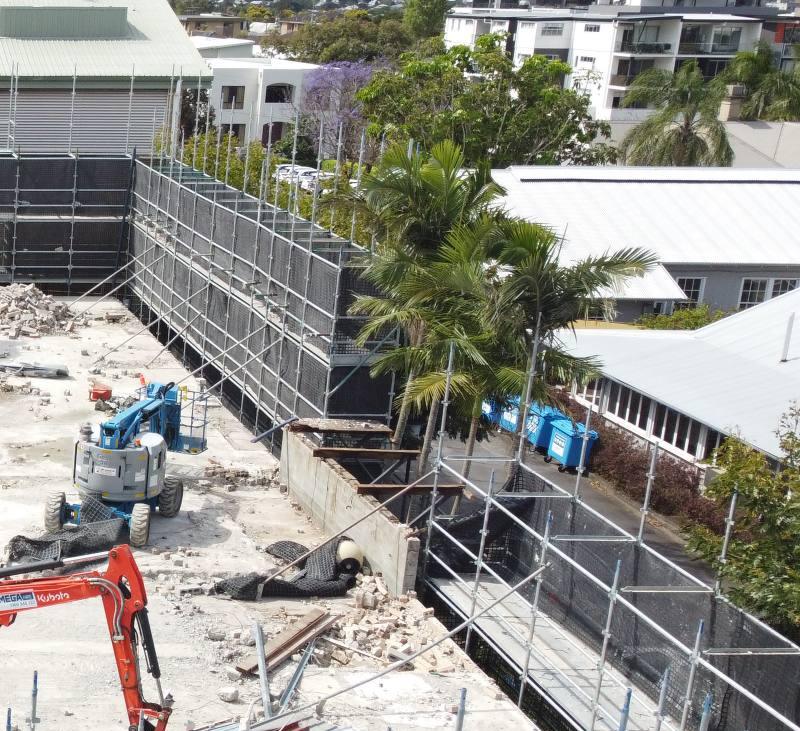
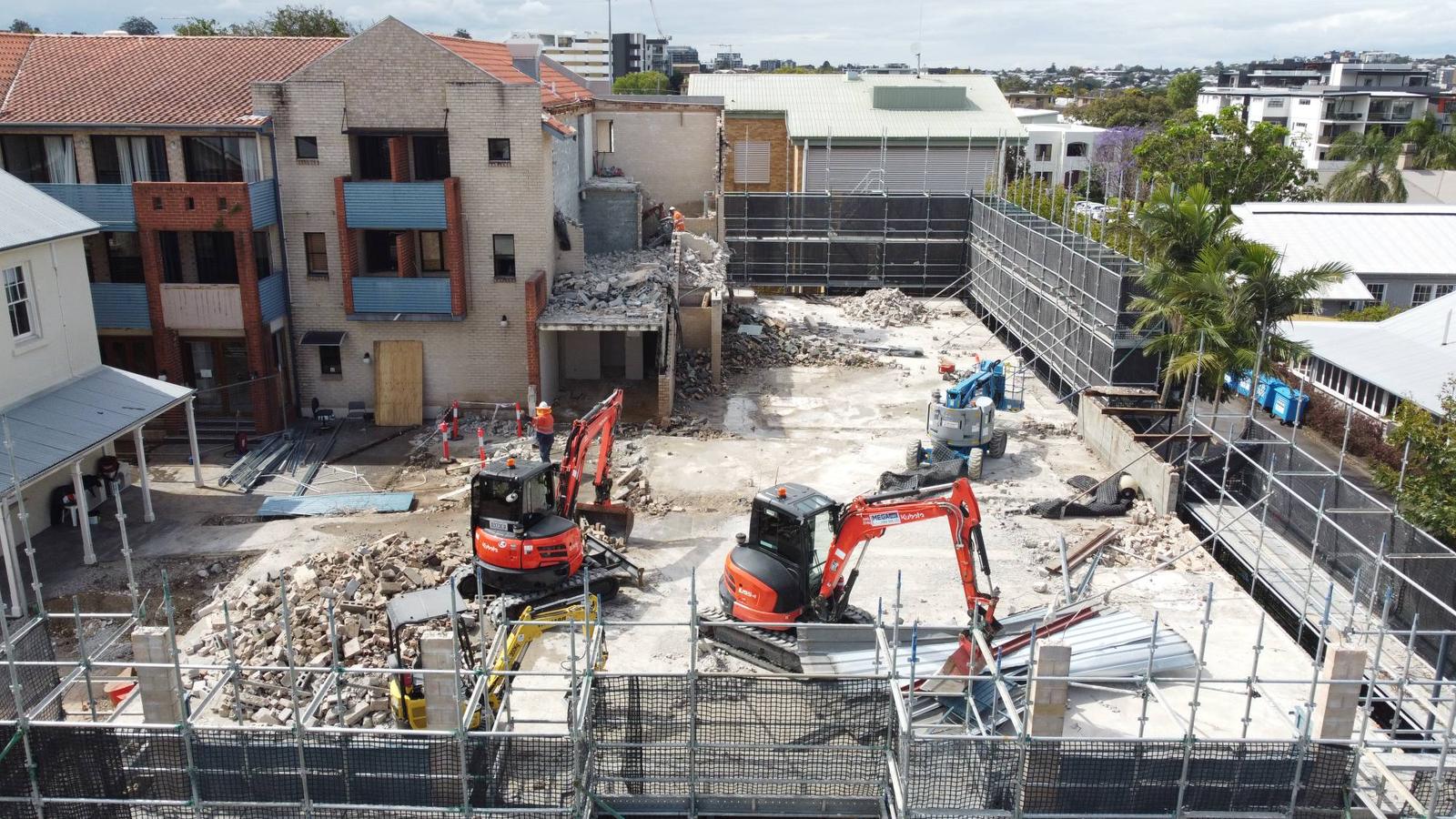
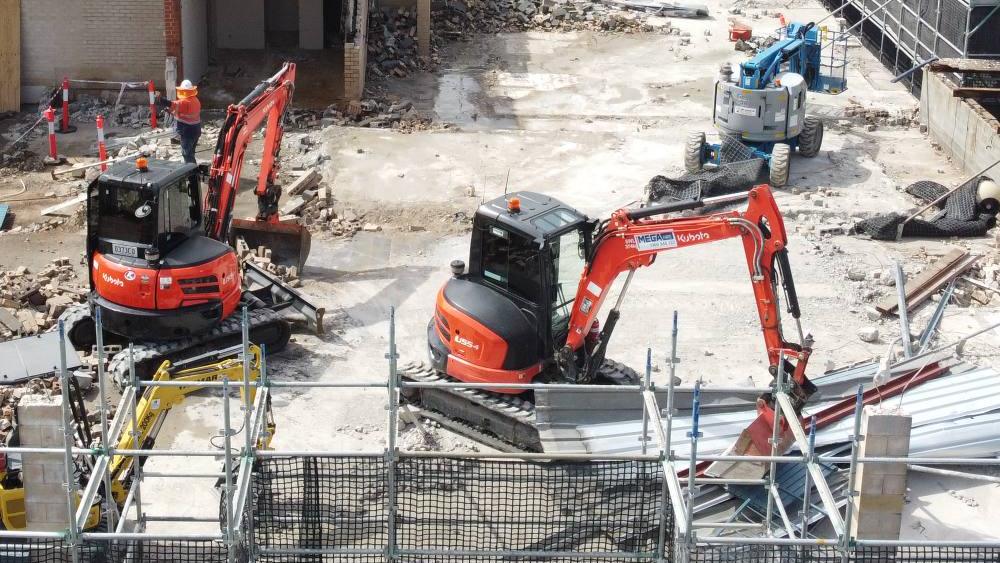
On the Ramada Hotel, engineered temporary propping, detailed sequencing and containment demolition scaffold kept two adjoining retained structures stable while the upper levels next to them were removed. On Grand Plaza, the remaining tilt panels were propped and left free-standing, ready to tie into the new structure.
Temporary works are designed around the demolition sequence, not bolted on afterwards. The propping goes in before the structure it replaces comes out.
Remaining tilt panels had to be propped, free-standing, ready to tie into the new structure.
Advanced DeconstructionWhat stays up,
and how.
Temporary works for demolition wherever something has to be retained, protected or left ready for the next build.
- Engineered ProppingPropping to retained walls, slabs and structures so they stay stable through every stage of demolition.
- Tilt Panel ProppingRemaining tilt panels propped and left free-standing, ready to tie into the incoming structure.
- Containment ScaffoldContainment demolition scaffold protecting retained structures and surrounding areas.
- Structural SeparationTemporary support where one structure is separated from a retained building beside it.
- Demolition SequencingThe removal order designed so the structure stays stable at each step, not just at the end.
- Debris and InterfacesManaging falling debris around live interfaces, restricted access and adjoining property.
Exactly what we
hold, by jurisdiction.
| Jurisdiction | Demolition licence | Asbestos |
|---|---|---|
| QUEENSLAND | UNRESTRICTED | CLASS A & B |
| SOUTH AUSTRALIA | UNRESTRICTED | CLASS A & B |
| WESTERN AUSTRALIA | UNRESTRICTED | CLASS A & B |
| TASMANIA | UNRESTRICTED | CLASS A & B |
| VICTORIA | UNRESTRICTED | CLASS A & B |
| ACT | UNRESTRICTED | CLASS A & B |
| NEW SOUTH WALES | OVER 15 METRES | CLASS A & B |
Licences are held per jurisdiction, not nationally. Crews travel as required and have completed work from Brisbane to Perth and Hobart to Weipa.
Five stages.
Support first.
The rule is simple: nothing comes out until whatever it was holding up is being held up by something else.
Structural assessment
What has to stay, what it is currently resting on, and what happens to it as each element around it is removed.
Temporary works design
Propping, containment and the demolition sequence are engineered together for the specific structure, so they work as one plan rather than two.
Install before removal
Propping and containment scaffold are installed and in place before any element they replace is taken out.
Stability at every stage
The sequence is followed stage by stage so the retained structure stays stable throughout, not just once the demolition is finished.
Left ready for tie-in
Retained elements are left free-standing and stable, ready to tie into the incoming structure without a gap in the programme.
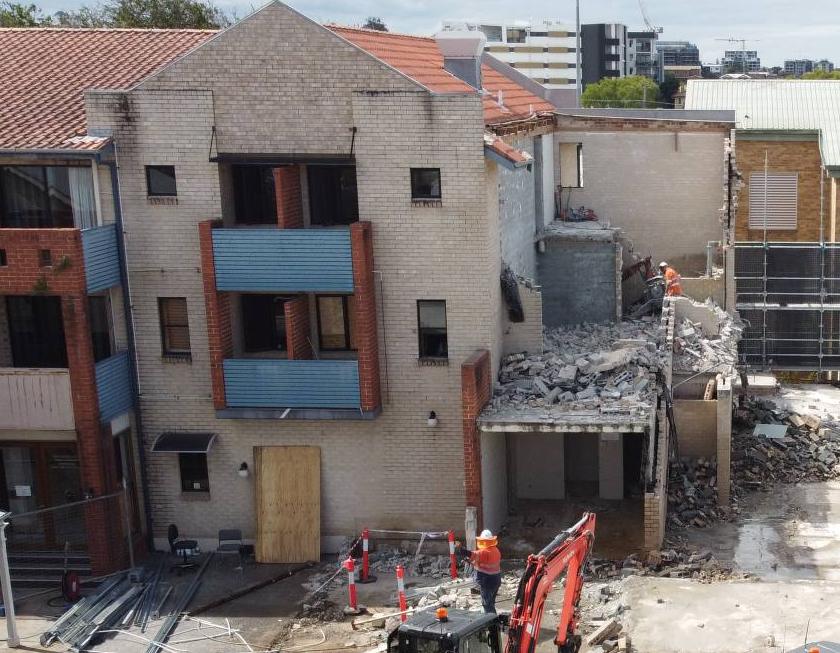
Both jobs
depended on it.
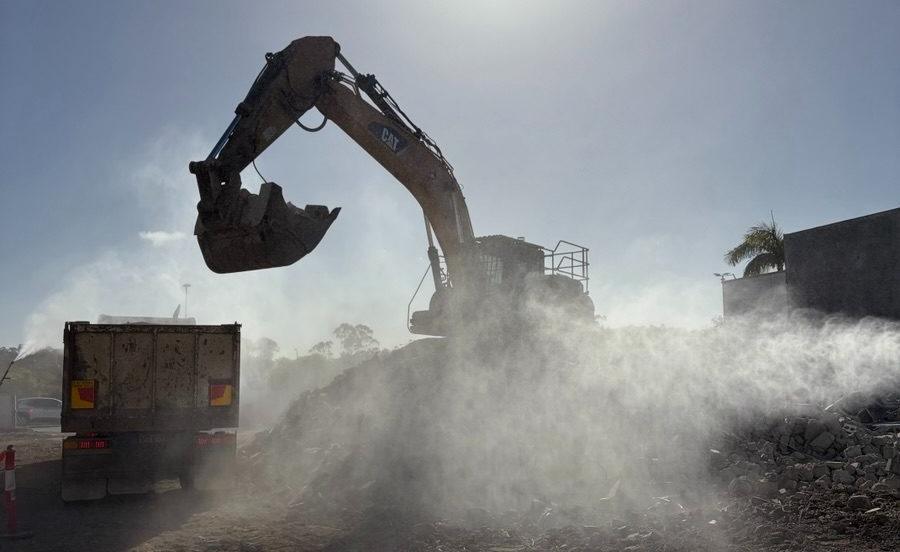
Temporary Works,
by sector.
The questions
we actually get.
Written for the person who has to justify the appointment internally, not for a search engine.
Why does a demolition need temporary works?
Whenever anything is being retained. Removing one element changes where the loads go, and the temporary works carry them until the demolition is finished or the new structure takes over. If nothing is being kept, a demolition may need very little. If something is, it needs a design.
Can you leave tilt panels standing for the new build?
Yes. On the Grand Plaza cinema demolition the remaining tilt panels were propped and left free-standing, ready to tie into the new structure, so the incoming build could start from them rather than from scratch.
What is containment demolition scaffold?
Scaffold with containment that surrounds the demolition to manage falling debris and protect retained structures and the areas around them. On the Ramada Hotel it was part of what allowed the upper levels to come down beside buildings that were staying.
Can you separate a building from the one next door?
Yes. It needs temporary support to the retained building, a designed removal sequence and a clean structural separation. At the Ramada Hotel the demolition zones were separated from the retained structures, with new structural openings formed as part of the works.
How do temporary works affect the programme?
They are part of it from day one. The propping goes in before removal starts, so it is planned into the sequence rather than being a delay discovered halfway through the job.
Why use one contractor for demolition and temporary works?
Because the sequence and the propping are the same decision. When the contractor taking the structure down is also responsible for holding the rest of it up, nothing falls between two scopes. See technical demolition.
Rarely one
discipline alone.
A temporary works job usually pulls in one or two of the others. All of them are delivered in-house, under the same licence structure and the same safety system.
Technical Demolition
Live, occupied, heritage and access-restricted structural demolition.
02Demolition Works
Full-scale commercial, industrial and residential demolition under unrestricted licence.
03Asbestos Management
Class A and B removal, registers, air monitoring and independent clearance.
04Soil Remediation
Contaminated land remediation, soil testing and validation, bulk earthworks.
06Concrete Specialists
Concrete and slab cutting, wall penetrations and robotic demolition.
Price a
project
Scope, drawings, site constraints. We will tell you what is actually involved, including the parts nobody else mentions.
Start an enquiry Emergency responseUrgent
works
Structural failure, unexpected asbestos, a site that has to be made safe today. Straight to a person, not a form.
1300 988 488 Capability statementSend to
your team
The full capability statement, licences and recent project record, as a PDF you can put in front of a pre-qual panel.
Download